How the Best F1 Teams Win — And What Your Business Can Learn From It
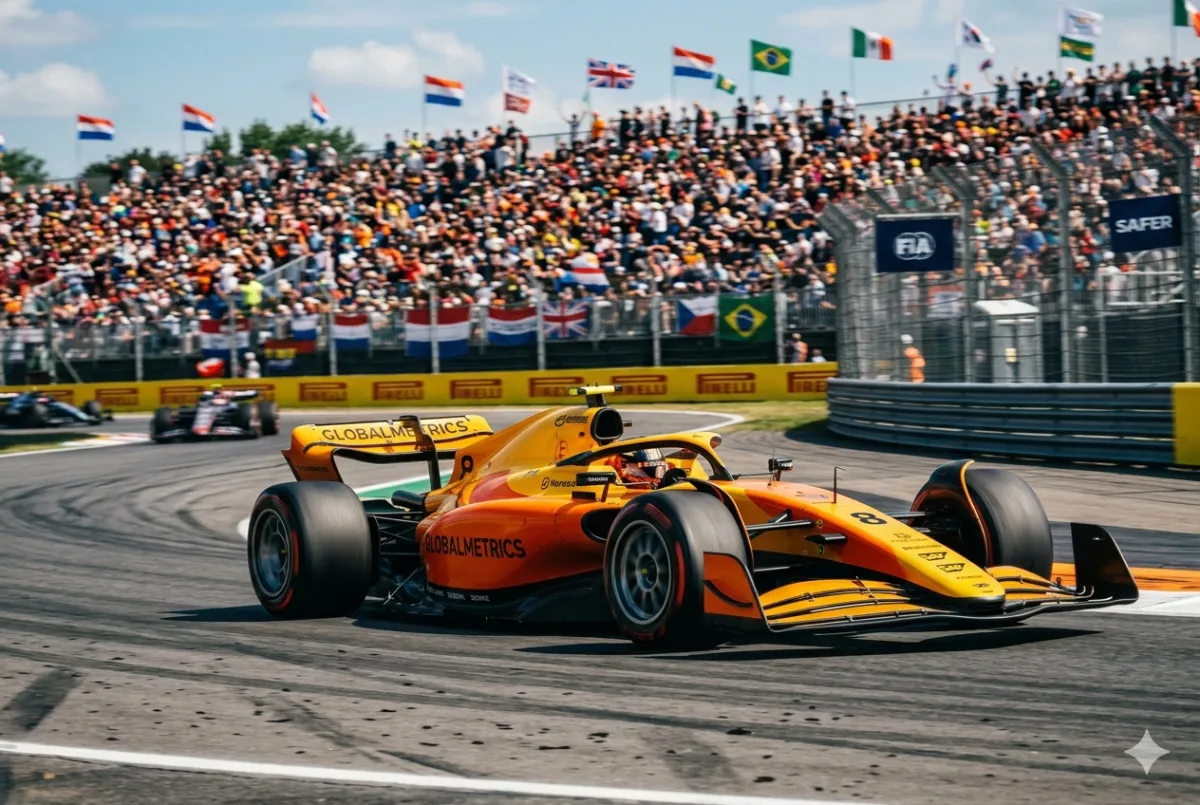
A couple of days ago, the F1 season started. The best drivers on the planet, the most sophisticated machines in the history of motorsport, and thousands of people paying a fortune just to watch the best compete at what they do best. I'm a Formula 1 fan — always have been. And while thinking about the race, something clicked that I live every single day working with retail, hospitality, and service businesses.
Your business is exactly like a Formula 1 car. The parallel is perfect — and the lesson is uncomfortable.
The Objective Is Always to Win
In F1, the goal is crystal clear: win the race, accumulate points, win the championship. No ambiguity. And winning doesn't just mean crossing the finish line — it means doing it before everyone else.
In business, the equivalent is sustainable profit. Growing, retaining customers, differentiating from the competition, and building a loyal fan base that not only comes back but also brings others with them.
"You don't win a race on race day. You win it in the thousand kilometers of preparation nobody sees." The same logic applies in business.
The Car: Your Business as a System
An F1 team builds the most complex machine in the history of sport. Every component — engine, tires, aerodynamics, brakes, DRS, thermal management — is part of an interdependent system. If one component fails or degrades, the car's overall performance drops. And the most critical part: they know about it before it fails.
Why? Because they measure everything, in real time, with hundreds of sensors. The pit wall knows the temperature of every tire, the brake pressure in every corner, the aerodynamic degradation kilometer by kilometer. They don't wait until the end of the race to find out how they're doing. They act on the data while the race is happening.
Your business is the same. You have people, processes, physical spaces, products, and a value proposition. That's the car. You built it with years of work, investment, and learning. It's probably a very good car.
The components of your business look something like this:
Product / service— your value proposition (the engine)
Team— customer-facing staff performance (the driver)
Physical environment— ambiance, cleanliness, layout (aerodynamics)
Speed of service— wait times, response times (tire grip)
Value for money— price-to-quality ratio (fuel efficiency)
Problem resolution— how you handle things when they go wrong (brakes)
Every one of these components affects your overall performance. And just like in F1, if you don't know the real-time state of each one, you're flying blind.
The Mistake Almost Every Business Makes
Here's the point that keeps me up at night — and that should keep any business owner or operations manager up as well.
Most businesses measure the final race result — revenue, average ticket, monthly sales — but never measure the car's speed in real time.
Imagine an F1 team that only reviews results at the end of the championship. No telemetry during the race. No tire data. No engine alerts. They simply wait to see if they won, and only then ask what went wrong.
Sounds absurd, right? But that's exactly what most businesses do with their customer experience.
The Problem With "I Already Know What My Customers Think"
When I talk to business owners or operations managers, one phrase comes up with a disturbing frequency:"I know my customers — I know what they think."
They say it with full conviction. And they're right… for the 2% who leave a Google review or stop at the register to share their feedback. But the other 98% walked out the door in silence. Some will come back. Some others will come back because they don't have another alternative, yet. Others won't.
Back to F1: imagine your telemetry only captures 2% of the race data. Would you make strategy decisions based on that? Would you adjust the wing, change tires, or modify the engine map with that information? Never.
Yet that's the data set most businesses are using to make decisions about their customer experience every single day.
The Real Numbers
Digital surveys — email, QR codes, post-purchase links — typically achieve response rates of1% to 2%. That means for every 100 customers who had an experience at your location, you're hearing from 1 or 2 of them.
On-site physical feedback collection — capturing the customer's voice at the moment of the experience, when it's fresh, intuitive, and frictionless — consistently reaches10% to 20%response rates or more.
That's not a marginal improvement. That's 10x more data. That's the difference between guessing and actually knowing. Between reacting months later and correcting course this week.
Race Strategy: Acting on the Data
An F1 team doesn't just collect data — they use it. In real time. The pit wall calls the driver, adjusts the tire strategy based on track conditions, modifies the aero setup based on the weather. Data without action is just noise.
The same applies to your business. Customer feedback has value only if it reaches you in time to correct something. If you find out in three months that your Brickell location had a service problem on Thursday nights, you've already lost hundreds of customers who didn't come back — and who told five friends about their bad experience.
Real-time feedback transforms your operation into a team that adjusts strategy during the race, not one that reads the post-mortem report on Monday morning.
The Businesses That Will Win the Championship
In today's F1, the teams that dominate aren't necessarily the ones with the most powerful engine. They're the ones who best understand their data, make decisions fastest, and most systematically convert information into competitive advantage.
The businesses that will win over the next few years won't necessarily be the ones with the best product or the nicest location. They'll be the ones that stay closest to their customers — the ones with the telemetry system running, race after race, visit after visit.
You built the car. You invested in the team. You opened the locations. Now it's time to turn on the sensors.
One Last Thought
The Miami GP is the perfect reminder that speed without information is just luck. The fastest car on the grid can lose a race because of a tire strategy miscall, a missed weather window, or an undetected mechanical issue. Precision beats raw power. Systems beat intuition. Data beats gut feel.
Ask yourself honestly: How are you really listening to your customers — at every location, every day?
If the honest answer is "not as well as I should be," that's the gap between where you are and where you want to be.
At GlobalMetrics, we help businesses capture real customer feedback at the point of experience — in real time, at every location — with response rates up to 20x higher than traditional digital surveys. If you're ready to turn on the telemetry, let's talk.